Many farmers notice something frustrating after cultivating the same land repeatedly.
Yield begins to reduce.
Even when fertilizer application remains constant, crop performance declines over time. Pest problems increase. Soil becomes harder to manage.
The common response is to apply more fertilizer.
But sometimes the real problem is not fertilizer.
It is poor cropping sequence.
Continuous planting of the same crop on the same land weakens soil productivity. Crop rotation helps restore balance while improving long-term farm performance.

What Is Crop Rotation?
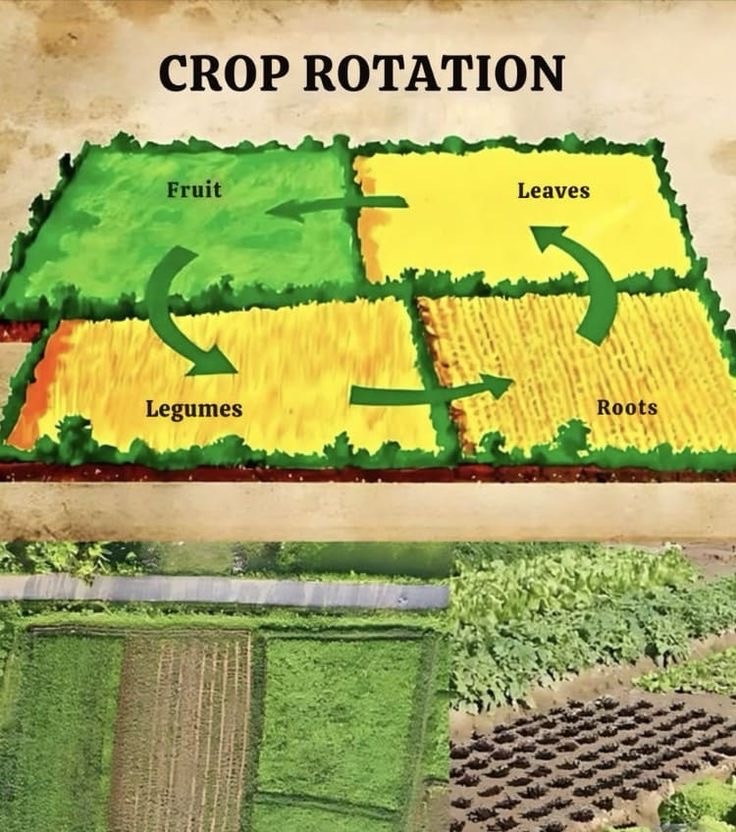
Crop rotation means planting different crops on the same farmland across different seasons or years instead of repeating one crop continuously.
Rather than growing maize every season, a farmer alternates crops strategically.
For example:
- Year 1: Maize
- Year 2: Soybean
- Year 3: Cassava
Each crop interacts with soil differently.
Some remove nutrients heavily. Others restore nutrients. Some interrupt pest cycles.
Rotation allows soil to recover naturally while maintaining productivity.
Why Continuous Cropping Creates Problems
Every crop depends on specific nutrients.
Maize, for instance, consumes large amounts of nitrogen. When planted repeatedly, soil nutrients decline quickly.
Over time:
- Fertility reduces
- Pest populations increase
- Disease organisms accumulate
- Yield becomes unstable
Farmers then spend more on fertilizer and chemicals just to maintain previous output levels.
Production cost rises while efficiency falls.
Crop rotation breaks this cycle.
Soil Fertility Improvement Through Rotation
Certain crops improve soil condition.
Legumes such as soybean, cowpea, and groundnut help add nitrogen back into the soil through natural biological processes.
When cereals like maize are planted after legumes, they often perform better even with reduced fertilizer input.
Healthy soil structure improves water retention and root development.
Long-term productivity depends heavily on soil management practices like rotation.
Pest and Disease Control Benefits
Pests and diseases often specialize in particular crops.
When the same crop is planted continuously, pest populations find consistent food sources.
Their numbers increase season after season.
Changing crops disrupts pest life cycles.
For example, pests that attack maize may not survive when legumes or root crops replace maize the following season.
This reduces infestation pressure naturally.
Lower pest pressure can reduce chemical usage and operational cost.
Weed Management Advantage
Crop rotation also affects weed growth.
Different crops require different spacing, canopy cover, and cultivation practices.
Changing crop types prevents dominance of specific weed species adapted to one farming system.
Over time, weed pressure becomes easier to manage.
Reduced weed competition improves yield performance.
Financial Benefits of Crop Rotation
Crop rotation is not only about soil health.
It also improves financial stability.
Different crops respond differently to market conditions. Rotating crops allows farmers to participate in multiple market cycles instead of depending on one commodity.
If maize price drops one season, soybean or cassava may provide better returns the next.
Diversification across seasons distributes income risk.
Stable farms often rotate crops intentionally.
Planning an Effective Rotation System
Successful rotation requires planning rather than random change.
Farmers should consider:
- Nutrient demand of each crop
- Root depth differences
- Market demand
- Crop maturity period
A simple example for Nigerian conditions could include:
Season One — Maize
Season Two — Legume crop
Season Three — Root crop
This sequence balances nutrient usage while supporting soil recovery.
Rotation and Long-Term Investment Farms
For investors managing large agricultural projects, crop rotation protects asset value.
Farmland productivity declines when soil is exhausted.
Maintaining soil health ensures consistent yield across years.
Rotation becomes part of long-term asset management rather than seasonal decision-making.
Sustainable productivity attracts stronger investment confidence.
Common Mistakes Farmers Make
Some farmers rotate crops without planning compatibility.
Others return too quickly to the same crop before soil recovery occurs.
Another mistake is ignoring market demand while rotating crops.
Rotation should balance agronomy and profitability.
Both soil health and market realities must guide decisions.
Record Keeping Supports Better Rotation
Farm records help track performance across seasons.
Yield comparison between rotated and non-rotated fields often reveals clear improvement.
Documentation allows farmers to refine future planting decisions.
Data turns experience into strategy.
The Bottom Line
Crop rotation protects soil, reduces pest pressure, improves yield stability, and strengthens long-term profitability.
Healthy soil supports sustainable agriculture.
Farmers who think beyond one season often achieve more consistent results over time.
Agriculture is not only about what you plant today.
It is about preserving productivity for tomorrow.
If you want your farmland to remain productive year after year, crop planning must go beyond a single season.
At Vantage Nigeria, we help farmers and investors design sustainable crop systems that protect soil health while maintaining profitability.
Contact our team to structure a long-term farm production plan suited to your land and investment goals.