Pig Farming in Nigeria:
What It Costs and What You Can Earn
A plain-language breakdown of startup costs, monthly expenses, realistic income — and what nobody tells you before you begin.
Pig farming is one of the most profitable livestock businesses in Nigeria right now. The numbers are real, the demand is consistent, and the production cycle is short compared to cattle. But it is also a business that rewards people who go in with accurate information — and punishes those who rely on guesswork or overly optimistic projections they read online.
This piece gives you the actual numbers: what you will spend to start, what you will spend every month to keep the farm running, and what a well-managed pig farm can realistically bring in. We will also cover the things most pig farming articles gloss over — disease risk, feed cost realities, and the market access questions that ultimately decide whether a farm makes money or slowly drains it.
Why Pig Farming Makes Economic Sense in Nigeria
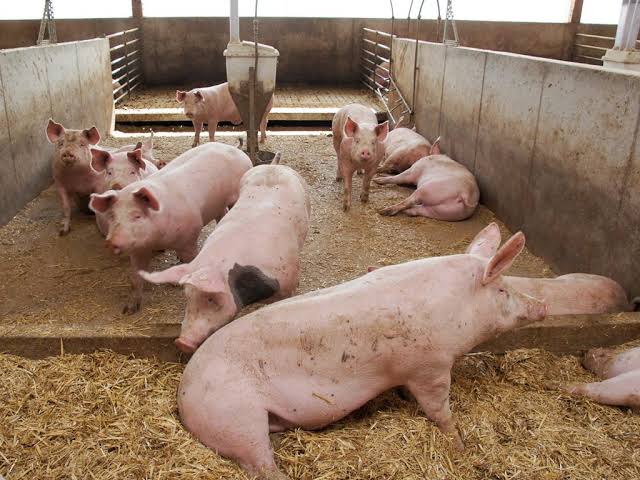
Before we get into the costs, it helps to understand why pig farming stands out among livestock options in Nigeria. A sow — a female pig — can give birth twice a year and produce between 8 and 14 piglets per litter under good management. That means one breeding sow can produce up to 28 piglets in a single year. Compare that to cattle, where one cow typically produces one calf annually, and the numbers tell a compelling story.
Pigs also reach market weight faster than almost any other large livestock animal. A piglet weighing about 1.5kg at birth can reach 90 to 100kg in five to six months with proper feed and care. That short turnaround means a farmer can generate income multiple times within a single year rather than waiting 18 to 24 months the way cattle farmers do. For anyone who cannot afford to wait long periods before seeing a return on money invested, this matters a great deal.
Demand is also steady. Pork is widely consumed across the South South, South East, and South West, and increasingly in other parts of the country. Hotels, restaurants, pepper soup joints, event caterers, and everyday buyers form a consistent customer base. Unlike some crop markets that slow down at certain times of the year, the demand for pork does not disappear — it actually peaks during the festive season between October and January, which is when prices go higher.
One breeding sow can produce up to 28 piglets in a single year. With the right feed and management, those piglets reach market weight in five to six months. Very few livestock businesses can match that production speed.
Choosing the Right Breed
The breed of pig you choose affects both your costs and your income. In Nigeria, the most commonly raised breeds are Large White, Landrace, Duroc, and local breeds. Each one has a different growth rate, litter size, and feed conversion ratio — meaning how much feed it takes to produce one kilogram of body weight.
Most commercial farmers in Nigeria use crossbreeds that combine the strengths of two breeds, typically Large White crossed with Landrace. This cross gives you a pig that grows fast, produces large litters, and adapts well to Nigerian weather and available feed. It is the most sensible starting point for anyone building a farm with income in mind.
Fast growth, large litters, adapts well to Nigerian conditions. The most common commercial breed in the country.
Long body, good mothering ability, high milk output. Often crossed with Large White for better piglet survival.
Reddish coat, excellent muscle development, high-quality meat. Works well as a terminal sire in a crossbreeding setup.
Hardy and disease-resistant but slower to grow and smaller at maturity. Better for free-range or low-input setups.
Crossbred pigs cost more to buy as breeding stock, but they repay that difference quickly through better litter sizes, faster growth, and lower feed waste. If you are serious about profit, start with quality crossbreds.
| Breed | Avg. Litter Size | Months to Market Weight | Market Weight (kg) | Climate Suitability |
|---|---|---|---|---|
| Large White | 10 – 12 | 5 – 6 | 90 – 100 | Excellent |
| Landrace | 9 – 11 | 5 – 6 | 85 – 95 | Good |
| Duroc | 8 – 10 | 5 – 7 | 95 – 110 | Good |
| Local Breeds | 5 – 7 | 8 – 10 | 60 – 75 | Excellent |
What It Costs to Start a Pig Farm in Nigeria
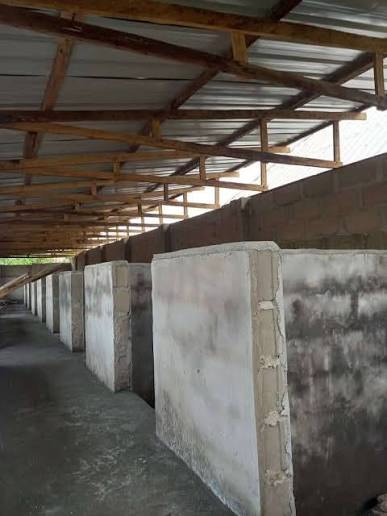
Startup costs depend entirely on the scale you choose. A beginner operation with 2 sows and 1 boar is very different from a commercial farm with 10 or 20 sows. The figures below are based on current market conditions across South West Nigeria — particularly Ogun and Oyo States where feed and livestock inputs are widely available. Prices will vary by state, so treat these as realistic reference points rather than fixed quotes.
Small-Scale Starter Farm (2 Sows + 1 Boar)
Medium-Scale Commercial Farm (10 Sows + 2 Boars)
These figures assume you already own or have access to land. If you need to acquire farmland, that cost is separate and must be calculated based on your location. A pig farm also needs reasonable distance from residential areas due to odour — at least 500 metres is the general standard. Proper, legally documented land is non-negotiable before you spend any money on structures or animals.
Monthly Running Costs: The Numbers That Really Determine Your Profit
A lot of new farmers calculate startup costs carefully and then underestimate what it takes to keep a pig farm running every month. This is where many get into trouble. Feed is the largest single expense and typically accounts for 60 to 70 percent of your total production cost. Everything else — labour, vet care, utilities, cleaning supplies — makes up the rest.
A pig in the finishing stage, between 60kg and market weight, eats roughly 2 to 2.5kg of feed per day. At current commercial feed prices in Nigeria — between ₦800 and ₦1,200 per kilogram for quality grower or finisher feed — feeding one pig per month costs between ₦48,000 and ₦90,000. Multiply that by the number of animals on the farm and you begin to see why feed management is so central to whether the business makes money.
Many experienced farmers reduce feed costs by formulating their own — using maize, soybean cake, fish meal, bone meal, and vitamin premixes bought directly from suppliers. A well-formulated homemade feed can cut feed costs by 30 to 40 percent compared to commercial feed. It requires knowledge and consistency to get right, but it is one of the most effective things a farmer can do to protect margins.
What You Can Earn: The Income Side of the Numbers
Revenue from pig farming comes primarily from live pig sales. Most small and medium farms in Nigeria sell finished pigs at market weight to dealers, butchers, restaurants, or directly to individual buyers. Some farms process on-site and sell pork cuts at a premium, but this adds complexity and is typically a step taken once the core operation is stable.
A finished pig at 90 to 100kg live weight currently sells for between ₦120,000 and ₦180,000 in most parts of Nigeria, depending on location, the type of buyer, and the time of year. Prices tend to be highest between October and January when festive-season demand pushes up the market. Selling directly to hotels, restaurants, or abattoirs — cutting out the middleman — consistently adds ₦10,000 to ₦30,000 per animal to your net return.
At steady state — which most farms reach between 8 and 12 months after starting, once the production cycle is fully running — a well-managed 10-sow farm can clear between ₦330,000 and over ₦1 million per month in net profit. The wide range reflects real differences between farms: feed strategy, mortality rate, market access, and management quality. The farms at the top of that range buy feed ingredients in bulk, sell directly to end buyers, and keep mortality below 5 percent through consistent health management.
The farms that earn the most are not always the biggest. They are the ones that control feed costs through bulk buying or self-formulation, and that sell directly to restaurants, hotels, and butchers — not through dealers who take a cut from every sale.
The Things Most Pig Farming Articles Will Not Tell You
Here is where we go beyond the income projections and talk about the realities that separate people who go into pig farming with clear eyes from those who go in with high hopes and come out frustrated.
Disease can erase months of work in days
African Swine Fever — ASF — has no cure and no vaccine. It is 100 percent fatal in pigs and it spreads fast. An outbreak on a farm means losing the entire herd. There is no treatment to try, no partial recovery to hope for. The only real protection is strict biosecurity: controlling who enters the pig pen, quarantining new animals for at least two weeks before they join the main herd, cleaning and disinfecting pens regularly, and never bringing pork products near a live farm. Farmers who cut corners on biosecurity learn this lesson the expensive way. It is not an optional precaution.
Feed cost is the variable that controls your profit margin
Commercial pig feed is convenient but expensive. Many farmers who start with commercial feed find that their margins shrink or disappear entirely when feed prices rise — as they have done repeatedly over the past few years with the cost of maize and soybean. The farmers who stay consistently profitable are those who either buy feed ingredients in bulk directly from millers, formulate their own feed, or both. Learning to formulate pig feed properly is one of the highest-return skills a serious pig farmer can develop.
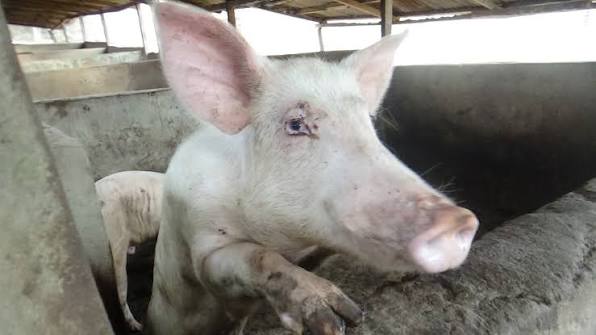
Buy your first breeding sows already pregnant if possible, or introduce them to your boar within days of settling in on the farm. A sow that is two to three months pregnant when you buy her will give you piglets within weeks of arrival. This shortens the gap between setup and your first income cycle considerably. Time spent waiting on an unpregnant sow is money spent with nothing moving forward.
Is Pig Farming the Right Business for You?
Pig farming rewards people who show up consistently. The animals need to be fed on schedule every single day. The pens need to stay clean or disease spreads fast. Health checks need to happen regularly, and any sign of illness needs to be acted on the same day it is noticed — not the day after. Even with hired labour on the farm, you need enough understanding of the operation to know when something is wrong.
That said, the income is real and well-documented across Nigeria. The country produces significantly less pork than it consumes, which means demand continues to be higher than supply. A farmer who manages costs carefully, protects the herd from disease, and has a direct relationship with buyers can build a profitable, stable business within 12 to 18 months of starting.
If you are considering this for the first time, start small. Two to four sows is a manageable entry point. It teaches you the full production cycle — from breeding to weaning to market — without putting everything at risk if early mistakes happen. Scale the operation once you genuinely know how it works from the inside.
The figures in this article are estimates based on current market conditions and are meant to give you a realistic starting point. Actual costs and returns will differ based on your location, the feed strategy you use, your breed choice, how well the farm is managed, and who your buyers are. Before committing any money, speak with farmers who are already running pig operations in your specific area. Visit at least two or three working farms. Build your financial plan on real, local numbers — not averages from the internet.
Pig farming in Nigeria is not a scheme for quick money. It is a real business with real costs, real risks, and real income for those who take it seriously. The farmers who do well at it are the ones who prepared properly — and started on solid ground.
Want to Start a Farm on Verified, Dispute-Free Land?
Vantage Nigeria provides fully documented agricultural land and end-to-end farm management services. Talk to our team before you begin.
Get in Touch with Vantage Nigeria