


The Cassava Paradox: Navigating Gluts, Value Chain Gaps, and the Path to Industrial Scale
An exhaustive analysis of Nigeria’s cassava market crisis, structural value chain bottlenecks, processing conversion economics, and actionable pathways toward commercial scale.
The Paradox of Abundance
Nigeria stands as the undisputed global titan in cassava production, generating over 62 million metric tonnes of fresh cassava tubers annually—accounting for roughly 20% of total world output. However, this massive agrarian volume conceals a deep structural paradox. Despite national dominance at the farmgate level, Nigeria remains caught in a recurring cycle of severe market gluts, localized farmgate price collapses, and an overwhelming reliance on imported industrial cassava derivatives such as modified starches, High Quality Cassava Flour (HQCF), liquid glucose, and industrial bioethanol.
A severe nationwide market glut exposed systemic vulnerabilities in agricultural logistics and processing integration. Raw root farmgate prices plummeted by up to 75% across core production belts in South-West and Middle-Belt Nigeria, forcing smallholders into severe financial distress. Paradoxically, large-scale industrial processing plants across the country continued to run well below 30% installed capacity, paralyzed by high logistics costs, fragmented supply networks, and an inability to source fresh tubers within the strict post-harvest processing window.
This research paper dissects the mechanics behind this market disconnect, maps structural value chain gaps, analyzes technical processing conversion rates, evaluates industrial CAPEX/OPEX models, and outlines an operational framework to transform agricultural volatility into sustained industrial wealth.
Anatomy of the Cassava Value Chain
The domestic cassava architecture is bifurcated into two distinct ecosystems operating with minimal synergy: the highly resilient traditional food supply system and the underdeveloped, capital-intensive industrial sector.
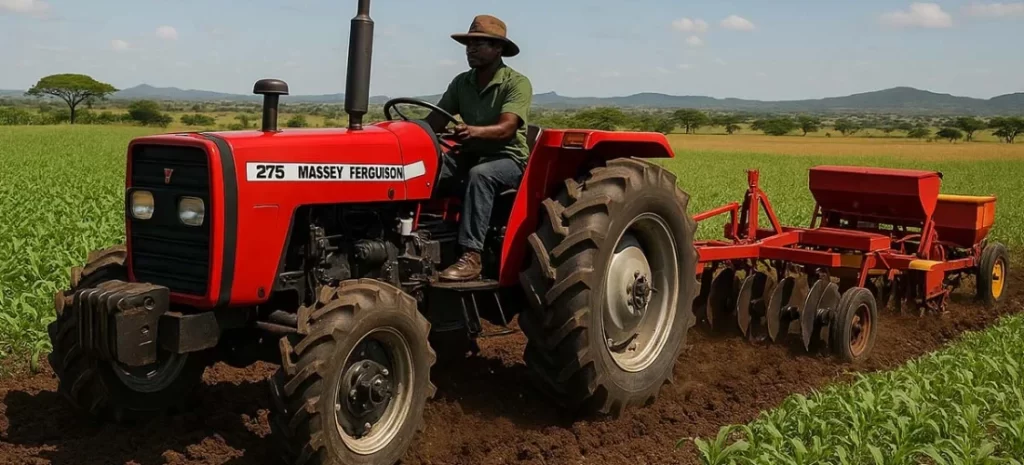
Cultivation is heavily dominated by an estimated 5.5 million smallholder farmers utilizing manual techniques, uncalibrated stem varieties, and rain-fed agriculture. National average yields hover around 10.5 to 12.0 tonnes per hectare—well below commercial potential thresholds of 22 to 30 tonnes per hectare achievable with improved TME 419 cultivars and balanced NPK fertilizer regimes.
Over 90% of harvested roots are immediately processed via informal, micro-scale artisanal hubs into local dietary staples like Garri, Fufu, Lafun, and Abacha. While vital for regional food security, this consumer market has a rigid elasticity ceiling. When regional harvests spike, local demand saturates rapidly, triggering immediate price crashes.
Comprises commercial factories engineered to produce High Quality Cassava Flour (HQCF), food-grade starches, native industrial starches, sorbitol, glucose syrups, and fuel-grade anhydrous bioethanol. This tier holds immense macroeconomic growth potential but remains severely constrained by unreliable raw material pipelines.
The Industrial Deficit & Import Reliance
The core paradox of Nigerian cassava lies in the country’s massive import bill for agricultural derivatives that could be manufactured locally. Domestic manufacturing sectors—spanning pharmaceuticals, packaging adhesives, food and beverage manufacturing, textiles, and paper production—consume vast quantities of industrial starches and sweeteners imported from Asia and Europe.
| Cassava Derivative / Commodity | Annual National Demand | Verified Domestic Output | Structural Deficit & Macro Impact |
|---|---|---|---|
| Industrial & Native Starch | 310,000 Metric Tonnes | 20,000 Metric Tonnes | 290,000 MT Import Gap (~93.5% Deficit) |
| High Quality Cassava Flour (HQCF) | 250,000 Metric Tonnes | 35,000 Metric Tonnes | 215,000 MT Deficit across bakeries & mills |
| Industrial Bioethanol (E10 Blend) | 1.2 Billion Litres | < 50 Million Litres | Over $1.5 Billion FX drain annually |
| Raw Tuber Production Base | 62,600,000 Metric Tonnes | 62,600,000 Metric Tonnes | Suffers cyclical farmgate gluts and post-harvest loss |
This massive gap persists because processing plants cannot operate efficiently without a continuous, high-volume supply of fresh tubers delivered within a strict price envelope. When raw root transportation costs escalate or road networks degrade, processors cannot compete with imported corn starch or sugarcane ethanol.
The Plight of the Primary Producer
At the heart of the cassava market collapse is the physiological reality of the crop itself: fresh cassava roots contain up to 65% moisture and undergo rapid physiological deterioration (PPD) within 24 to 48 hours post-harvest. Once harvested, tubers must be processed immediately or risk complete rot and dry-matter breakdown.
Because smallholders lack local preservation technology or pre-arranged corporate off-take agreements, middleman buyers and informal agents exploit this perishable window during peak harvest periods, forcing prices far below production costs.
“A farmgate pickup load that fetched ₦160,000 during the previous dry season dropped to less than ₦40,000 at the height of the glut. After paying manual labor teams to uproot the tubers and loading costs, we were literally losing money on every hectare harvested. Many farmers simply left mature crops unharvested in the ground to rot.”
| Production Region | Standard Unit Measurement | Historical Peak Price | Glut Farmgate Price | Net Margin Impact |
|---|---|---|---|---|
| Kogi / North-Central Belt | 3.5-Tonne Truck / Pickup Load | ₦160,000 | ₦40,000 | -75.0% Loss of Farm Value |
| Edo / South-South Belt | Retail Harvest Container (Paint Bucket) | ₦3,200 | ₦800 | -75.0% Loss of Farm Value |
| Ogun / South-West Belt | Direct Farmgate Tonne (Fresh Root) | ₦110,000 | ₦35,000 | -68.2% Loss of Farm Value |
The Economics of Commercial Processing
From an industrial investment standpoint, low farmgate root prices represent a double-edged sword. While catastrophic for unorganized farmers, low root costs dramatically reduce raw material OPEX for well-capitalized processing plants. Raw root procurement accounts for approximately 65% of overall operational expenses in cassava transformation factories.
To establish a viable commercial processing plant, investors must carefully analyze conversion yield ratios. On average, it requires 4.0 to 4.5 tonnes of fresh roots (at 25% starch content) to produce 1 tonne of High Quality Cassava Flour (HQCF), and 4.5 to 5.0 tonnes of fresh roots to produce 1 tonne of native industrial starch.
| Factory Configuration Scale | Daily Tuber Intake | Estimated CAPEX Outlay | Target Output & Primary Markets |
|---|---|---|---|
| Small-Scale Primary Hub | 5 – 10 Tonnes / Day | ₦30,000,000 – ₦50,000,000 | Semi-mechanized Garri, Flash-dried HQCF for regional bakeries. |
| Medium Commercial Plant | 30 – 50 Tonnes / Day | ₦150,000,000 – ₦300,000,000 | Automated Starch extraction, Industrial HQCF, Glucose Syrup. |
| Large Industrial Complex | 100+ Tonnes / Day | ₦800,000,000 – ₦2,500,000,000+ | Pharmaceutical-grade Starch, Anhydrous Bioethanol distillers. |
Processing Feasibility & ROI Estimator
Use the dynamic financial modeling tool below to simulate capital requirements, operational expenditures, and payback timelines across various processing plant configurations:
Cassava Processing Feasibility Calculator
Structural Interventions & Policy Solutions
To eliminate recurring agricultural gluts and unlock the commercial potential of cassava, a multi-tiered structural intervention strategy must be implemented across public and private sectors:
Establish village-level primary processing centers equipped with mechanical chippers and solar or biomass dryers. Converting wet cassava roots into stable dried cassava chips (10-12% moisture content) within 24 hours stops the perishability clock, allowing chips to be stored for up to 6 months and transported cheaply to distant starch factories or bioethanol plants.
Commercial processors should operate a core nucleus farm supplying 30% of their daily factory intake, while securing the remaining 70% through guaranteed forward-offtake contracts with outgrower cooperatives. Outgrowers receive high-yield stems, extension support, and pegged minimum price floors, shielding them from market collapses.
Enforce existing national mandates requiring a 10% bioethanol blend in automotive fuels (E10) and 10% HQCF substitution in commercial wheat flour milling. Tariff protection on imported corn starch and raw wheat flour will incentivize corporate off-takers to source domestic cassava starches.
Data Sources & Empirical References
- National Bureau of Statistics (NBS), Selected Food Price Watch and Agricultural Output Survey Report.
- International Institute of Tropical Agriculture (IITA), Cassava Value Chain Analysis & Processing Benchmarks.
- Federal Ministry of Agriculture and Food Security (FMAFS), Bioethanol Value Chain Development Framework.
- Central Bank of Nigeria (CBN), Statistical Bulletin on Commercial Agricultural Credit & Value Addition.
- Food and Agriculture Organization (FAOSTAT), World Cassava Production Data and Yield Metrics.
- African Development Bank (AfDB), Special Agro-Industrial Processing Zones (SAPZ) Program Briefs.
- PricewaterhouseCoopers (PwC) Nigeria, Agribusiness Review: Unlocking Industrial Starch & Derivatives.
